

If you’re struggling with sudden costs while on benefits, the DWP Loans £812 could provide essential financial help. In 2025, the Department for Work and Pensions continues to offer interest-free Budgeting Loans (and Budgeting Advances for Universal Credit claimants) to help cover urgent expenses like rent, furniture, or travel. This guide explains who can apply for the DWP £812 loan, how much you can borrow, how to apply, and what to expect when repaying it.
What is the DWP £812 loan in 2025?
The DWP £812 loan is a type of Budgeting Loan offered by the Department for Work and Pensions (DWP). It helps people on certain benefits cover essential or emergency costs when savings or income aren’t enough.
In 2025, the DWP continues to offer interest-free loans, allowing claimants to borrow up to £812 — though the exact amount depends on individual circumstances.
What does the £812 DWP loan mean for benefit claimants?
The DWP £812 loan isn’t a gift or grant; it’s a repayable loan deducted gradually from your benefits. The £812 figure represents a typical maximum for single applicants, though couples and families can borrow more.
These loans are designed to help with vital one-off expenses such as:
-
Replacing or repairing household items
-
Paying rent in advance or removal costs
-
Covering maternity or funeral expenses
-
Travel for work or medical appointments
Helen Barnard, Director of Policy at the Joseph Rowntree Foundation, Explains;
“Budgeting Loans are a lifeline for people on benefits who face sudden costs,”
What types of DWP loans are available in 2025?
The DWP offers two main types of benefit-related loans:
-
Budgeting Loans – for those on income-related benefits such as Income Support, Jobseeker’s Allowance, ESA, or Pension Credit.
-
Budgeting Advances – for Universal Credit claimants who meet the qualifying period.
Both types are interest-free and repaid through deductions from your regular benefit payments.
Who can get a DWP £812 loan in 2025?

What are the eligibility criteria for a DWP Budgeting Loan?
To qualify for a DWP Budgeting Loan, you must:
-
Receive one of these income-related benefits for at least 26 consecutive weeks:
-
Income Support
-
Pension Credit
-
-
Have no outstanding DWP loans or debts that would prevent repayment.
-
Be living in the UK and actively claiming one of the qualifying benefits.
You won’t qualify if you’re on Universal Credit — in that case, you’d apply for a Budgeting Advance instead.
Are Universal Credit claimants eligible for the £812 loan?
Yes — but under the Budgeting Advance system.
If you claim Universal Credit, you can apply for a Budgeting Advance rather than a Budgeting Loan.
You must have:
-
Been on Universal Credit for at least 6 months,
-
Earned less than £2,600 (or £3,600 for couples) in the past 6 months, and
-
No outstanding Advance repayments.
How much you can borrow depends on your household:
-
Single claimants: up to £812
-
Couples: up to £1,200
-
Families with children: up to £1,500
How much can you borrow through a DWP loan in 2025?
Is £812 the maximum loan amount?
The £812 figure represents the typical maximum loan amount for single claimants. However, your final loan amount depends on:
-
Your ability to repay (based on benefit income)
-
Outstanding DWP debts
-
Your household size
| Applicant Type | Minimum Loan (£) | Maximum Loan (£) |
|---|---|---|
| Single person | 100 | 812 |
| Couple | 100 | 1,200 |
| Family with children | 100 | 1,500 |
If you already have another DWP loan or advance, the total you can borrow may be lower.
What can the DWP £812 loan be used for?

Which expenses are covered by the DWP Budgeting Loan?
You can use your DWP loan for essential living or emergency costs, such as:
-
Furniture, household appliances, or repairs
-
Travel for medical reasons or job interviews
-
Clothing, footwear, or school uniforms
-
Maternity expenses or funeral costs
However, you cannot use the loan for:
-
Paying off existing debts
-
Court fines or legal costs
-
Non-essential purchases
How to apply for a DWP £812 loan in 2025?
What are the steps to apply for a DWP Budgeting Loan?
You can apply in two ways:
1. Online:
-
Visit GOV.UK Budgeting Loan page.
-
Log in to your benefits account.
-
Complete and submit the application form online.
2. By Post:
-
Download form SF500 from GOV.UK.
-
Fill it out and send it to your local Jobcentre Plus office.
Once submitted, the DWP usually responds within 7–15 working days.
How does the DWP decide if your £812 loan will be approved?
The DWP considers:
-
How long you’ve received benefits.
-
Whether you can afford repayments.
-
Any existing loans or arrears.
-
The urgency and purpose of your request.
If approved, the loan will be deposited directly into your bank or credit union account.
How do repayments work for the DWP £812 loan?
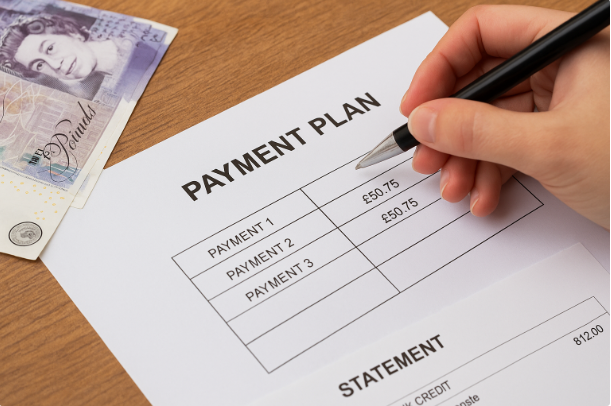
How much will you repay monthly for a DWP loan?
Repayments are automatically deducted from your weekly or monthly benefits.
The DWP adjusts the deduction amount based on your income and circumstances.
Typical repayment examples:
| Loan Amount (£) | Repayment Period (Months) | Weekly Deduction (£) |
|---|---|---|
| 400 | 52 | ~£7.70 |
| 812 | 78 | ~£10.40 |
| 1,200 | 104 | ~£11.50 |
If your benefits stop before you’ve fully repaid the loan, you’ll need to arrange repayments directly with the DWP.
Can you repay early or get another loan while repaying?
Yes — you can make early repayments if you can afford to, which reduces your debt faster.
However, you cannot get another Budgeting Loan until your existing one is mostly repaid.
What if your DWP £812 loan application is refused?
Why might the DWP reject your Budgeting Loan application?
Common reasons include:
-
You haven’t been on benefits long enough (less than 26 weeks).
-
You already have a DWP loan or unpaid debt.
-
The DWP believes you can manage without additional help.
If refused, you can:
-
Request a reconsideration in writing.
-
Provide extra evidence of financial hardship.
-
Reapply after a few months.
Are there alternatives to the DWP £812 loan?
What other support can you get if you’re refused a DWP loan?
If your loan is declined or doesn’t meet your needs, you can explore:
-
Local Welfare Assistance Schemes (via local councils).
-
Credit Unions offering low-interest community loans.
-
Charitable grants from organisations such as Turn2Us, British Gas Energy Trust, or Family Fund.
These alternatives can sometimes provide non-repayable grants or smaller emergency loans.
Conclusion
The DWP £812 loan is an essential support tool for those receiving benefits in 2025. It allows low-income households to manage emergencies and essential purchases without resorting to high-interest borrowing.
To make the most of it:
-
Borrow only what you genuinely need.
-
Ensure your benefit details are up to date.
-
Budget for the repayment deductions.
Handled wisely, a DWP Budgeting Loan or Budgeting Advance can provide short-term relief without long-term financial strain.
FAQs
1. How do I qualify for a DWP £812 loan?
You must have been on qualifying benefits (like Income Support, ESA, JSA, or Pension Credit) for at least 26 weeks.
2. Is the £812 DWP loan a grant or do I have to repay it?
It’s a loan, not a grant — repayments are automatically deducted from your benefits.
3. Can I get a DWP Budgeting Loan if I’m on Universal Credit?
Universal Credit claimants can apply for a Budgeting Advance instead, offering similar support.
4. How long does it take to get a DWP loan approved?
It typically takes 7–15 working days for the DWP to process and pay approved loans.
5. What can I use my DWP £812 loan for?
It can be used for essential or emergency costs such as furniture, rent deposits, travel, or funeral expenses.

I’m Adam Milne, a business writer and co-author at UKBusinessMag.co.uk. I’m passionate about simplifying complex topics—whether it’s tax, startup strategy, or digital marketing—so that entrepreneurs can take action with confidence. With years of experience in small business consultancy, I bring a practical perspective to every piece I write, helping readers turn ideas into results.

